What Your Search Queries Reveal About Customer Intent

Written by Alok Patel
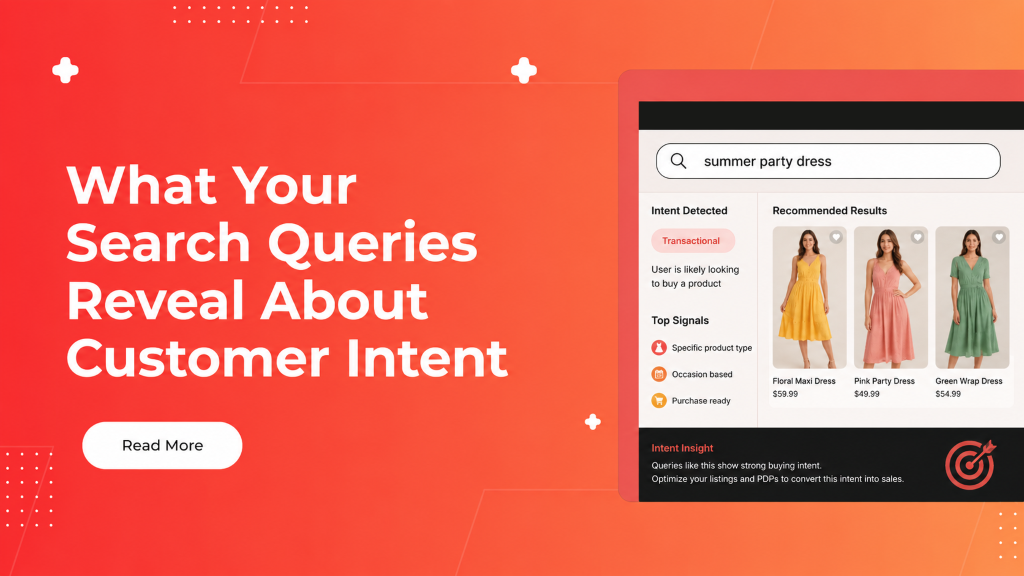
Search queries tell you far more than what shoppers typed into your site. They reveal what people want, how urgently they want it, how confident they are, and what kind of buying journey they are on. For ecommerce brands, especially Shopify stores, this makes search data one of the most valuable signals you can analyze.
When you understand customer intent behind search queries, you can improve product discovery, refine merchandising, reduce zero-result searches, and increase conversions. The difference between a vague query and a specific one often tells you exactly where the shopper is in the buying journey.
Why Search Queries Matter
A search query is a direct window into shopper behavior. Unlike clicks or scroll depth, which only show what happened on the page, search tells you what the shopper was trying to accomplish in the first place.
That matters because intent drives conversion. A person searching “running shoes” is in a different mindset than someone searching “black Nike running shoes size 9 under 5000.” One is browsing broadly. The other is closer to purchase and has already narrowed down key criteria.
If your store treats both queries the same, you miss an opportunity. Search queries show you how to match the right product, filter set, or content structure to the shopper’s real goal.
The Main Types of Search Intent
Most ecommerce search queries fall into a few broad intent categories. Understanding these helps you decode what the shopper is really asking for.
1. Navigational intent
These queries happen when the shopper is looking for a specific brand, product line, or category already in mind. Examples include “Nike Air Max,” “Levi’s 501,” or “iPhone 15 case.”
This type of query usually signals stronger purchase intent. The shopper knows what they want and is trying to find it quickly. If the store fails to return relevant results, conversion is at immediate risk.
2. Informational intent
These queries show that the shopper is still researching or comparing. Examples include “best sneakers for walking,” “what fabric is best for summer dresses,” or “laptop for video editing.”
These searches are not always immediate buying signals, but they are highly valuable. They tell you what content, filters, comparison pages, or educational product guidance you should offer.
3. Transactional intent
These are the most purchase-ready queries. They often include product type, attributes, price, size, color, or use case. Examples include “black boots size 8 under 3000” or “cotton kurta for office wear.”
Transactional queries are strong conversion opportunities. If the right products are easy to find, the shopper is likely much closer to purchasing.
4. Exploratory or style-based intent
These queries are more subjective and often appear in fashion, beauty, and home categories. Examples include “something like this,” “minimalist office outfit,” or “boho living room decor.”
These searches tell you the shopper is looking for inspiration, not just a product. Visual discovery, recommendations, and style-based merchandising usually perform better here than plain keyword matching.
What Query Structure Reveals
The words inside a query can tell you a lot about intent.
A short, broad query often means the shopper is early in the journey. A long, detailed query usually means they know more about what they want. Adding descriptors like color, size, material, occasion, or price usually signals stronger intent and a higher chance of purchase.
For example:
- “Shirt” is broad and ambiguous.
- “Men’s white formal shirt” is more focused.
- “Men’s white formal shirt slim fit size 40” is highly specific and likely closer to conversion.
The more qualifiers a query contains, the more useful it becomes for ranking and merchandising decisions.
What Zero-Result Queries Reveal
Zero-result searches are especially valuable because they expose gaps between customer language and your catalog. If shoppers search for something and get nothing back, they are telling you that your store does not understand their language, not necessarily that the product does not exist.
These queries may reveal:
- Missing synonyms.
- Misspellings.
- Regional language differences.
- Product naming mismatches.
- Catalog gaps.
- Missing attributes.
For example, a shopper might search for “trainers” while your catalog only uses “sneakers.” Or they may search for a product with a slang term your system does not recognize. These are not just failures. They are signals about how your customers actually speak.
What Repeated Queries Reveal
When the same terms appear again and again, they show consistent demand. That means the product, category, or attribute is important to your customers.
Repeated queries can indicate:
- High-demand products.
- Important categories.
- Missing inventory.
- Under-promoted collections.
- Merchandising opportunities.
If customers keep searching for something that is hard to find, that is a warning sign. It may mean the item is buried too deeply, not tagged properly, or not available often enough. Repeated search behavior helps you identify what deserves more visibility on the storefront.
High-Intent Attribute Queries
One of the strongest signals in search data is when shoppers add attributes to their query. Words like size, color, price, fabric, brand, or use case tell you they are making a more specific decision.
Examples:
- “black sneakers size 9.”
- “linen shirt for summer.”
- “office chair for back pain.”
- “wedding guest dress under 5k.”
These queries are often much closer to purchase than broad category searches. They also show exactly which filters and product attributes matter most to the shopper. That makes them useful for both search optimization and merchandising.
Style and Context Queries
Fashion, beauty, and home brands often see queries that are not strictly product-based. Instead, shoppers search by style, mood, occasion, or inspiration.
Examples:
- “date night dress.”
- “minimalist dining table.”
- “soft glam makeup.”
- “indian wedding outfit.”
These queries reveal that shoppers are not just trying to find an item. They are trying to match an identity, occasion, or aesthetic. That is why visual search, recommendations, and AI-powered discovery can be so effective in these categories.
If your search system only handles literal keywords, it will miss a large amount of intent.
What Queries Reveal About Confidence
Search queries also show how confident a shopper is in what they want.
Broad queries suggest uncertainty or early-stage exploration. Specific queries suggest confidence and readiness. Queries with prices, sizes, materials, or brands indicate the shopper has already narrowed the field.
This matters because confident users often need fewer steps to convert. If your store can recognize and support that confidence with relevant results, clear filters, and better ranking, you reduce friction and improve conversion rates.
How Query Intent Should Shape Your Store
Once you understand query intent, you can use it to improve your store in practical ways.
Better ranking
Broad queries may need bestsellers or popular products surfaced first. Specific queries may need exact or near-exact matches prioritized.
Better filters
If shoppers often search by size, price, or occasion, those filters should be more visible. Search data tells you what matters most to real users.
Better synonyms
If customers search with language your catalog does not use, add synonyms. This closes the gap between what people type and how products are labeled.
Better merchandising
High-intent queries can be matched with stronger promotional logic. For example, “running shoes for women” might highlight top-rated products, while “gym shoes under 3000” could emphasize value options.
Better content
Informational queries can be answered with buying guides, comparison pages, or collection content that supports the decision process.
Query Intent by Funnel Stage
Search queries often map to different parts of the funnel.
- Early-stage users ask broad, exploratory questions.
- Mid-stage users narrow by style, category, or use case.
- Late-stage users search with exact product attributes and price constraints.
Understanding this progression helps you decide what experience to show. A broad query may need inspiration. A highly specific one may need fast product matching. The better the alignment, the less friction the shopper feels.
Common Mistakes Stores Make
Many ecommerce brands collect search data but do not interpret it correctly. Some common mistakes include:
- Ignoring long-tail queries because they are less frequent.
- Focusing only on search volume and not intent.
- Treating zero-result searches as isolated errors instead of behavioral signals.
- Failing to segment searches by category or device.
- Not reviewing repeated queries over time.
- Not connecting search data to conversion performance.
Search queries are most useful when they are analyzed as a pattern, not just a list.
How to Use Search Queries Strategically
To get value from query data, use it to guide action.
Start by identifying the most common search terms and grouping them by intent. Then compare those terms against conversion, zero-result rates, and click-through rates. Look for patterns in what shoppers are trying to buy, how they describe it, and where the store fails to respond well.
From there, improve your search relevance, product tagging, filters, and merchandising rules. Over time, your search engine becomes more aligned with real customer language, which improves product discovery and sales.
Final Thought
Search queries are not just keywords. They are signals of desire, hesitation, urgency, and confidence. They tell you what customers are looking for, how they think, and where your store is helping or failing them.
If you use query data well, you can make your Shopify store feel more intelligent, more relevant, and easier to shop. That leads to better discovery and stronger sales.
For ecommerce brands, customer intent is already in the data. The challenge is learning how to read it.
Share this article
Help others discover this content