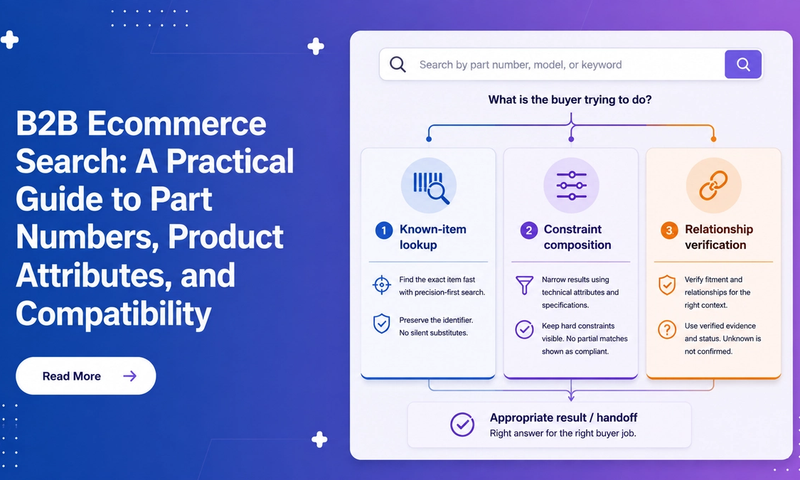
B2B Ecommerce Search: A Practical Guide to Part Numbers, Product Attributes, and Compatibility
B2B ecommerce search goes beyond keywords. Learn how to handle technical attributes, part numbers, and compatibility with confidence.
E-commerce insights, AI search strategies, and product discovery trends to help you stay ahead of the competition.
A non-numeric evaluation scorecard for separating visual resemblance from catalog identity, sellable-variant evidence, uncertainty, and availability. Visual similarity shows that a catalog candidate resembles an image. It does not, by itself, establish that the candidate is the same catalog item, that the image represents a specific sellable variant, or that the resolved variant is available...
Fashion ecommerce needs search and discovery tools that can handle visual intent, style ambiguity, size complexity, and fast-changing inventory. The best platforms combine semantic search, visual search, personalization, filters, and merchandising so shoppers can move from inspiration to purchase without friction. For fashion brands in 2026, the strongest tools are the ones that help shoppers...
Product discovery friction is one of the biggest hidden reasons shoppers leave an ecommerce store without buying. When people cannot quickly narrow down products, they get overwhelmed, lose confidence, and abandon the journey. Filters solve this problem by helping shoppers move from “too many options” to “the right options” in fewer steps. For Shopify stores...
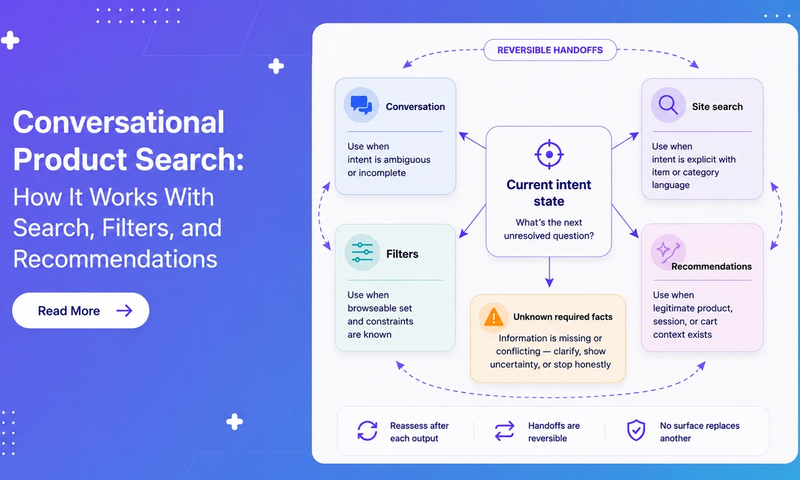
From answering shopper questions to guiding product discovery, conversational shopping is redefining ecommerce. Explore what it is, why it matters, and how brands can prepare for it.
Search should do more than return products. It should help shoppers move from a vague idea to a confident purchase with less effort, fewer dead ends, and better results. When search behaves like a guided shopping experience, it becomes one of the most valuable conversion tools on your ecommerce site. Most stores still treat search...
AI search has changed ecommerce discovery by making results more relevant, more contextual, and easier to browse. But as brands add merchandising rules, boosts, and promotions, they often face a hard question: how do you keep search accurate while still driving revenue? The answer is balance. Search should satisfy shopper intent first, but it also...
AI search becomes much more powerful when it recognizes that not every shopper is new. Returning visitors often have different goals, stronger signals, and clearer preferences than first-time users. When a search system adapts to repeat intent, it can make the shopping experience faster, more relevant, and more likely to convert. For ecommerce brands, this...
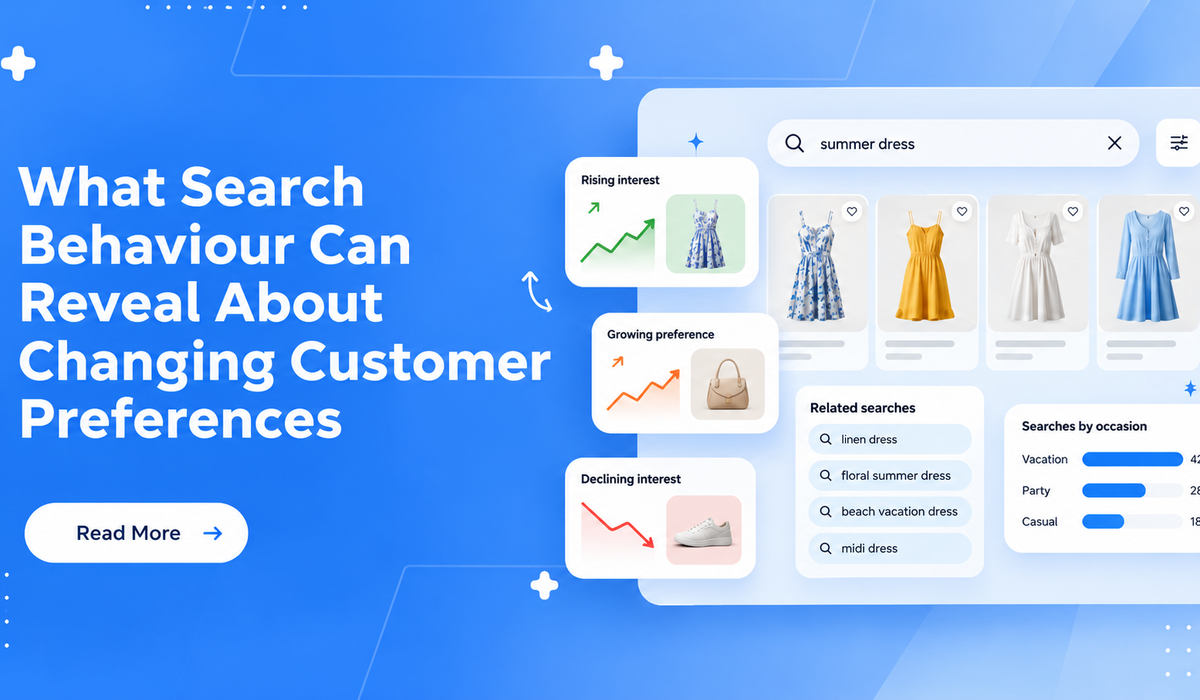
Query intelligence gives ecommerce brands a clearer view of what shoppers actually want when they use site search. Instead of treating search logs as raw data, it turns them into actionable insights that can improve relevance, filters, merchandising, and conversions. For Shopify stores and other ecommerce brands, this matters because search behavior is one of...
Conversational shopping is changing how people discover products online. Instead of typing a few keywords and hoping for the best, shoppers can now ask questions, refine preferences, and get guided recommendations in a more natural way. For ecommerce brands, this shift matters because customers increasingly expect stores to behave less like static catalogs and more...
See Wizzy.ai in action with a personalized demo tailored to your business needs
"Wizzy.ai increased our conversion rate by 45% in just 3 months. The AI search is incredibly accurate."
Sarah
VP of E-commerce