How to Improve Searchandising on Shopify
Searchandising on Shopify is about making search results sell better, not just look more relevant. It combines search relevance with merchandising rules so your bestsellers, highest-margin products, and in-stock items appear at the right moment for the right shopper. When done well, it can improve c

Searchandising on Shopify is about making search results sell better, not just look more relevant. It combines search relevance with merchandising rules so your bestsellers, highest-margin products, and in-stock items appear at the right moment for the right shopper.
When done well, it can improve conversion rates, reduce zero-result searches, and increase average order value by steering shoppers toward products they are most likely to buy.
What Searchandising Means
Searchandising is the practice of using merchandising logic inside your search and category results. Instead of showing results only by keyword match, you can layer in business goals such as best sellers, stock levels, margin, seasonality, and campaign priorities.
On Shopify, this matters because shoppers often use search when they already have buying intent. If those results are weak, the store loses revenue quickly, which is why Shopify recommends improving the search and discovery experience as part of store optimization.
Fix Search Relevance First
Before adding merchandising rules, make sure search relevance is actually working. If shoppers type “black formal shirt” and get unrelated products, merchandising rules will not save the experience.
Start by checking your top queries, zero-result terms, and low-click searches. Then improve synonyms, typos, product titles, tags, and attributes so search can understand shopper intent more accurately.
Prioritize Bestsellers and High-Converting Products
One of the most effective searchandising moves is boosting products that already convert well. If a product has strong sales history, high click-through rate, or low return rate, it deserves more visibility in search results.
This works especially well for broad queries like “dress,” “shoes,” or “gift.” In those cases, the shopper has not fully narrowed their intent, so showing proven winners can improve both conversion and revenue.
Use Stock and Margin Signals
Searchandising should not promote out-of-stock items or low-value products when better options exist. If a shopper is ready to buy, availability matters as much as relevance.
You can also use margin as a ranking signal. For example, if two products are equally relevant, giving a slight boost to the higher-margin item can improve profit without hurting user experience.
Add Seasonal and Campaign Rules
Search results should reflect what is happening right now. During wedding season, festive wear should rank higher. During summer, lightweight fabrics and seasonal collections should be boosted.
Campaigns work best when they are tied to search intent rather than just homepage banners. If someone searches for “running shoes,” surfacing a limited-time sports discount is more effective than showing a generic promotion.
Improve Filters and Facets
Good searchandising depends on strong filters. When shoppers can narrow by size, color, fabric, price, brand, or use case, they are more likely to find what they want and continue moving toward purchase.
Weak filters create frustration, especially on mobile. Shopify merchants should review whether filters match real shopper behavior and whether the most-used attributes are easy to access.
Reduce Zero-Result Searches
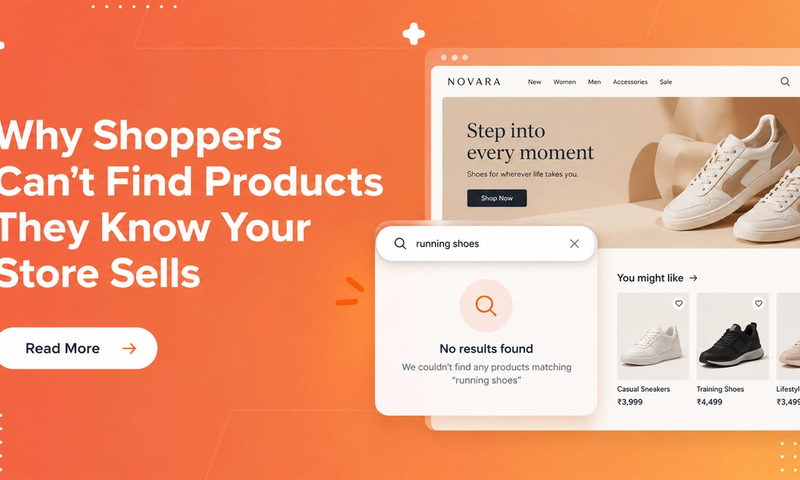
Zero-result searches are one of the biggest signs that searchandising needs work. If a shopper lands on an empty page, the opportunity is often lost immediately.
The fix is to combine smart search fallback with merchandising logic. You can show closest matches, popular alternatives, trending products, or a curated category page instead of a dead end.
Use Search Data to Guide Merchandising
Search logs are one of the best sources of merchandising insight. They reveal what shoppers want, what they misspell, what they cannot find, and what products are getting ignored.
Look for terms with high search volume but low conversion. These often signal either poor relevance or a merchandising issue, such as the wrong products being promoted or the right products being buried too deep.
Optimize for Mobile Shoppers
Mobile searchandising needs to be faster and simpler than desktop search. Small screens leave less room for clutter, so the first few search results matter even more.
Make sure autocomplete is useful, filters are easy to tap, and promoted products do not overwhelm the user. On Shopify, mobile search often drives high-intent traffic, so small improvements here can produce outsized revenue gains.
Tools That Can Help
Shopify’s Search & Discovery app is the basic starting point for improving store search and merchandising. It helps merchants shape how products appear in search and recommendations.
If you need more advanced control, apps like Searchanise, Nosto, Rebuy, and Wizzy offer more robust searchandising features such as smarter ranking, rules, and smarter fallback experiences. The right tool depends on how much control you want over ranking, personalization, and revenue logic.
A Simple Shopify Searchandising Checklist
- Fix top zero-result queries first.
- Add synonyms for common shopper terms.
- Boost bestsellers for broad queries.
- Demote out-of-stock items.
- Use margin and seasonality as ranking signals.
- Improve filters for mobile shoppers.
- Turn empty results into guided discovery.
- Review search logs weekly for new opportunities.
Final Takeaway
If you want better Shopify searchandising, think in three layers: relevance, merchandising, and conversion. First make search accurate, then shape what ranks higher, and finally use data to keep improving the experience.
The merchants who win are the ones who treat search results like a sales surface, not just a utility page.