The New Competition: Your Products vs AI Decision Systems
Ecommerce has always been competitive. Your products vs competitors. Your pricing vs alternatives. Your brand vs others in the category. That model is changing. You’re no longer competing only against other products— you’re competing against how AI systems evaluate and select products. From Shelf Co
Ecommerce has always been competitive.
Your products vs competitors.
Your pricing vs alternatives.
Your brand vs others in the category.
That model is changing.
You’re no longer competing only against other products—
you’re competing against how AI systems evaluate and select products.
From Shelf Competition to System Competition
Earlier, visibility depended on:
- Shelf placement (homepage, categories)
- Ads and promotions
- Brand recall
Now, visibility is increasingly determined by:
- How AI ranks your product
- How well your data is structured
- How confidently a system can recommend you
This shifts the battleground:
From:
- “How do I get seen by users?”
To:
- “How do I get selected by systems?”
How AI Decision Systems Actually Compete Your Product
AI systems don’t browse like humans. They:
- Parse structured data
- Compare attributes across products
- Evaluate value vs alternatives
- Optimize for best-fit outcomes
In milliseconds, your product is compared against:
- Competitors across multiple stores
- Variants and substitutes
- Pricing and delivery trade-offs
And then:
It either gets shortlisted
Or ignored entirely
There is no “scrolling to page 2”
Why Traditional Advantages Are Weakening
1. Visual Merchandising Has Limited Influence
Design, banners, and layout matter less when:
- AI intermediates discovery
- Results are consumed programmatically
If your product is not selected upstream:
Your UI never gets a chance
2. Brand Alone Is Not Enough
Brand still matters—but only after selection.
AI systems prioritize:
- Relevance
- Availability
- Value signals
If your product is not competitive on these:
Brand recall won’t save visibility
3. Paid Visibility Becomes Less Predictable
When agents aggregate results:
- Paid placements become less dominant
- Organic selection depends on data quality and relevance
This doesn’t eliminate ads—but reduces control over discovery
What Actually Determines Selection Now
AI systems evaluate products across four core dimensions:
1. Decision Readiness
- Is the product clearly defined?
- Are attributes complete and comparable?
Incomplete data reduces confidence:
Lower chances of being selected
2. Context Fit
- Does the product match the user’s exact need?
- Does it align with constraints (price, use case, urgency)?
Even slight mismatches:
Lead to exclusion
3. Fulfillment Reliability
- Is it in stock?
- Can it be delivered on time?
AI systems avoid risk:
Reliable options get prioritized
4. Relative Value
- Is pricing competitive?
- Are there better alternatives available?
AI compares instantly:
You are always evaluated in context, not isolation
The Real Shift: From Visibility to Selection
In traditional ecommerce:
- Being visible was enough
In agent-driven commerce:
- Being selected is everything
If your product is not:
- Ranked
- Shortlisted
- Recommended
It effectively does not exist.
Why Most Stores Are Not Prepared
Most ecommerce systems are optimized for:
- Human browsing
- Visual discovery
- Static ranking
They are not optimized for:
- Machine evaluation
- Real-time comparison
- Decision systems
This creates a gap:
Products are present
But not competitive in AI-driven selection
How to Compete in an AI-Driven Discovery Layer
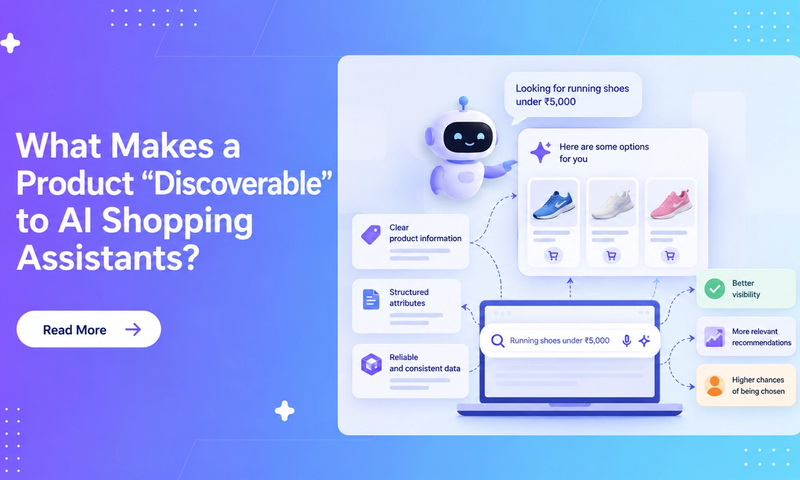
1. Improve Data Completeness
- Standardize attributes
- Ensure variant clarity
- Remove inconsistencies
Your product must be:
Easy to interpret programmatically
2. Optimize for Intent, Not Just Keywords
- Align product data with real use cases
- Capture contextual relevance
Focus on:
What the product solves—not just what it is
3. Align Ranking with Business and Performance Signals
- Use conversion data
- Incorporate inventory and margin
- Adjust dynamically
Ranking should reflect:
What should be sold—not just what matches
4. Ensure Real-Time Accuracy
- Inventory
- Pricing
- Availability
Outdated data leads to:
Lower trust from systems
Reduced selection probability
Where Wizzy Fits in This Shift
Most tools help you:
- Show products
Wizzy helps you:
- Get products selected
By combining:
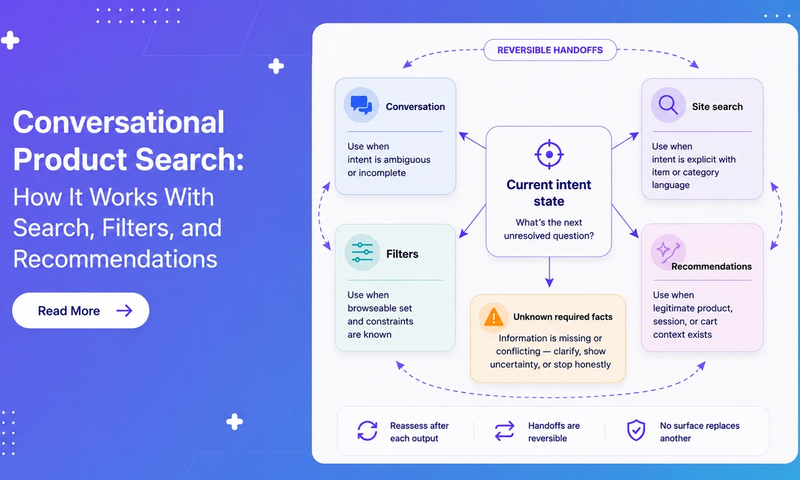
- Intent-aware search
- Dynamic ranking
- Merchandising control
It ensures your products are:
- Not just visible
- But competitive in decision systems
Final Thought
The biggest shift in ecommerce is not:
- AI replacing search
- Or automation replacing workflows
It’s this:
The decision layer is moving away from users
And into systems
And in that world, your real competition is no longer just other products—
It’s how well you perform inside
AI-driven decision systems
FAQs
Why are my products not showing up in AI-driven recommendations or search tools?
Because AI systems rely on structured, comparable data—not just keywords or descriptions.
Common issues:
Missing or inconsistent attributes
Poor taxonomy or categorization
Weak intent alignment
If your product cannot be clearly evaluated, it won’t be selected.
How do AI systems decide between similar products?
They compare across multiple signals simultaneously:
Relevance to the query or intent
Pricing and value vs alternatives
Availability and delivery timelines
Historical performance (clicks, conversions)
Small differences in these signals can determine which product gets selected.
Does ranking still matter if AI agents are making decisions?
Yes—but ranking becomes even more critical.
AI systems typically:
Evaluate top results first
Prioritize higher-ranked options
If your product isn’t in the top positions:
It’s unlikely to be considered at all
How can I improve my chances of being selected by AI systems?
Focus on three areas:
Data quality → complete, structured attributes
Relevance → align with real user intent
Performance → optimize based on conversion signals
Selection is driven by clarity + confidence, not just visibility.
Are ads and promotions still effective in an AI-driven discovery environment?
They still matter—but their role changes.
Ads can influence visibility
But selection depends on underlying product quality and data
If the product doesn’t meet decision criteria:
Paid visibility alone won’t sustain performance
What is the biggest mistake brands make in this shift?
Optimizing for exposure instead of selection.
Most brands try to:
Increase impressions
Improve UI
Add more products
But the real problem is:
Poor prioritization and weak decision signals
Until that is fixed, visibility will not translate into revenue.