How AI Search Adapts to Returning Shoppers and Repeat Intent
AI search becomes much more powerful when it recognizes that not every shopper is new. Returning visitors often have different goals, stronger signals, and clearer preferences than first-time users. When a search system adapts to repeat intent, it can make the shopping experience faster, more releva
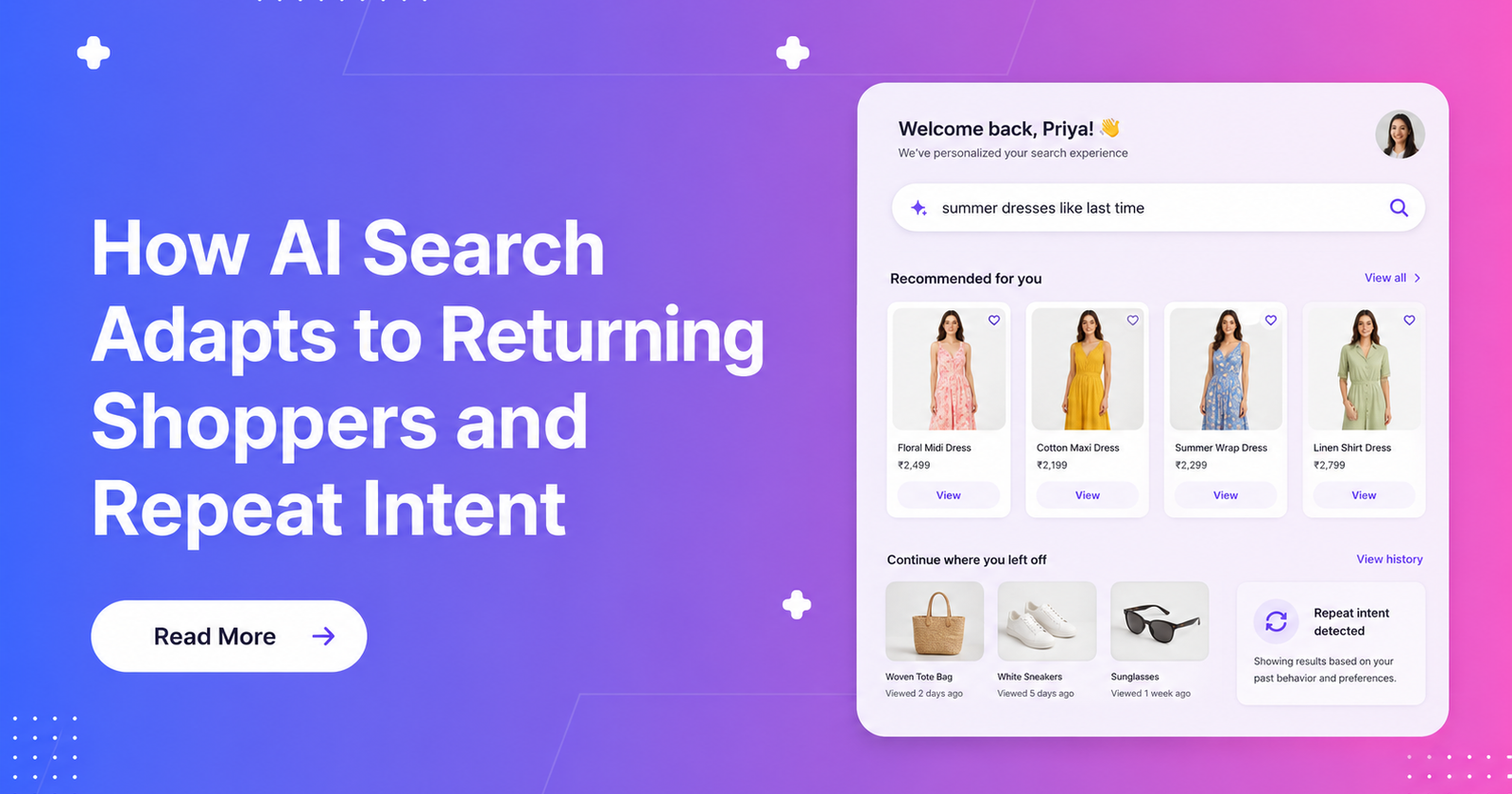
AI search becomes much more powerful when it recognizes that not every shopper is new. Returning visitors often have different goals, stronger signals, and clearer preferences than first-time users. When a search system adapts to repeat intent, it can make the shopping experience faster, more relevant, and more likely to convert.
For ecommerce brands, this matters because repeat shoppers already carry context. They may have browsed before, bought before, abandoned a cart, or shown interest in a specific category. AI search can use those signals to shape results in a way that feels more personal and less repetitive.
Why Returning Shoppers Matter
Returning shoppers are often among the most valuable users on an ecommerce site. They already know the brand, trust the store more than a first-time visitor, and usually need less persuasion. What they do need is speed and relevance.
A returning shopper does not want to start from zero every time. If they previously looked at running shoes, for example, showing them the same broad category without any context wastes time. If the system remembers that they prefer a certain size, brand, or style, the experience becomes smoother.
This is where AI search has an advantage over static search. It can adapt based on behavior, making the storefront feel more responsive to repeat intent.
What Repeat Intent Looks Like
Repeat intent is the pattern of a shopper coming back with similar or related needs. Sometimes they are continuing a previous search. Sometimes they are browsing the same category again. Sometimes they are ready to buy after comparing products earlier.
Repeat intent can appear in many forms:
- A shopper revisits the same category.
- A shopper searches for a similar product in a different color.
- A shopper returns after abandoning a cart.
- A shopper compares items they viewed previously.
- A shopper searches for complementary products after a first purchase.
These patterns tell the AI engine that the user is not starting cold. The search experience should reflect that.
How AI Search Learns From Behavior
AI search can adapt to returning shoppers by using behavior signals over time. It may learn from search history, click patterns, purchases, filters used, products viewed, and items added to cart.
That gives the system a better sense of what the shopper values. If someone consistently clicks premium products, the search engine can learn to surface higher-end items more often. If a shopper often filters by size, color, or price, those preferences can inform future results.
This is not just about remembering history. It is about using that history to reduce friction and increase relevance.
Personalization Without Confusion
The best AI search experiences personalize results without making the shopper feel trapped in a narrow bubble. That balance matters.
A returning shopper should see more relevant products, but not only the same products. The system should expand options based on what it knows while still allowing the user to explore. If the shopper previously bought one style of dress, the search engine can surface similar styles, complementary products, and related categories without repeating the exact same results.
This keeps the experience fresh while still benefiting from prior behavior.
Why Repeat Intent Improves Discovery
Discovery gets easier when the system understands that a shopper has already expressed interest. Instead of forcing them to repeat the same steps, AI search can skip ahead.
For example:
- A shopper previously viewed winter jackets.
- The next visit could prioritize jackets, cold-weather accessories, and related categories.
- If the shopper searches again for outerwear, the system can refine results using prior preferences such as size, color, or budget.
That kind of adaptation reduces the number of clicks needed to find the right product. It also makes the shopper feel understood, which improves engagement.
Returning Shoppers Often Search Differently
Returning visitors tend to use search differently from first-time visitors. They may search with more intent, shorter queries, or more specific product names because they already know part of what they want.
They may also search for:
- A variation of a product they saw before.
- The same product in a different size or color.
- An accessory that matches a prior purchase.
- A replacement item or refill.
- A product linked to a previously viewed category.
AI search should treat these searches as signals of continuity, not isolated events.
How AI Uses Past Purchases
Purchase history is one of the strongest signals for repeat intent. A shopper who bought athletic wear before may be more likely to browse similar products, complementary items, or upgraded versions.
AI search can use this history to:
- Prioritize relevant categories.
- Suggest matching products.
- Highlight accessories or add-ons.
- Avoid showing irrelevant items too early.
This helps the store feel more relevant without requiring the shopper to re-explain their needs.
How It Supports Cross-Sell and Upsell
Returning shoppers are also ideal candidates for cross-sell and upsell opportunities. Since AI search understands prior intent, it can suggest products that complement earlier behavior.
For example:
- A buyer of a dress might later see handbags, shoes, or jewelry.
- A customer who bought skincare products might see related serums or routines.
- Someone who searched for a laptop might be shown accessories or upgraded models.
This works best when the recommendations feel useful rather than forced. The goal is to support the shopper’s journey, not interrupt it.
It Helps Reduce Friction on Mobile
Mobile shoppers usually have less patience, less screen space, and less time. Returning shoppers on mobile benefit especially from AI search because the system can cut down on typing and decision-making.
If the store already knows what the shopper tends to buy, it can offer faster autocomplete, smarter ranking, and more relevant filter suggestions. That reduces the number of steps required to find the right item.
For repeat shoppers, this can make the difference between a quick purchase and abandonment.
Returning Intent in Search and Filters
AI search and filters should work together for returning visitors. If the shopper frequently uses certain filters, those can be surfaced earlier next time. If they usually shop within a specific category, the filter panel can prioritize the attributes that matter most in that category.
For example, if a returning customer often shops for fashion items and always filters by size and color, those options should not be buried. The system should make them easy to find.
This creates a guided experience that feels tailored to behavior instead of generic.
Common Mistakes Brands Make
One common mistake is treating every visitor the same. That ignores a huge amount of useful context.
Another mistake is over-personalizing without control. If the system only shows highly similar products, the shopper may feel boxed in. Good AI search should broaden the options when appropriate.
A third mistake is failing to update preferences over time. Shopper intent changes. A person who once browsed one category may have shifted to another. AI search has to stay flexible enough to reflect that.
The Role of Freshness
Repeat intent is not only about remembering the past. It is also about understanding what has changed.
If a returning shopper browsed products weeks ago, the system should know whether there are new arrivals, different stock levels, price changes, or updated recommendations. That keeps the experience relevant and current.
Freshness matters because shoppers do not want stale results. They want the latest useful options based on their original interest.
Measuring Success
To know whether AI search is adapting well to returning shoppers, track a few important signals:
- Search-to-click rate for returning users.
- Repeat visit conversion rate.
- Add-to-cart rate from personalized searches.
- Average order value among returning shoppers.
- Filter usage after search.
- Time to product discovery.
- Revenue per returning search session.
If these numbers improve, the personalization is probably helping. If they do not, the system may be too generic or too narrow.
Final Thought
AI search becomes much more valuable when it understands returning shoppers and repeat intent. The experience becomes faster, more personal, and easier to use because the system does not treat every visit like a first visit.
For ecommerce brands, that means better discovery, less friction, and stronger conversion opportunities. It also means the store can turn past behavior into a smarter future journey.
The best AI search systems do not just answer a query. They remember context, adapt to intent, and help shoppers move forward with less effort.