How Query Intelligence Helps Brands Optimize Search and Filters
Query intelligence gives ecommerce brands a clearer view of what shoppers actually want when they use site search. Instead of treating search logs as raw data, it turns them into actionable insights that can improve relevance, filters, merchandising, and conversions. For Shopify stores and other eco
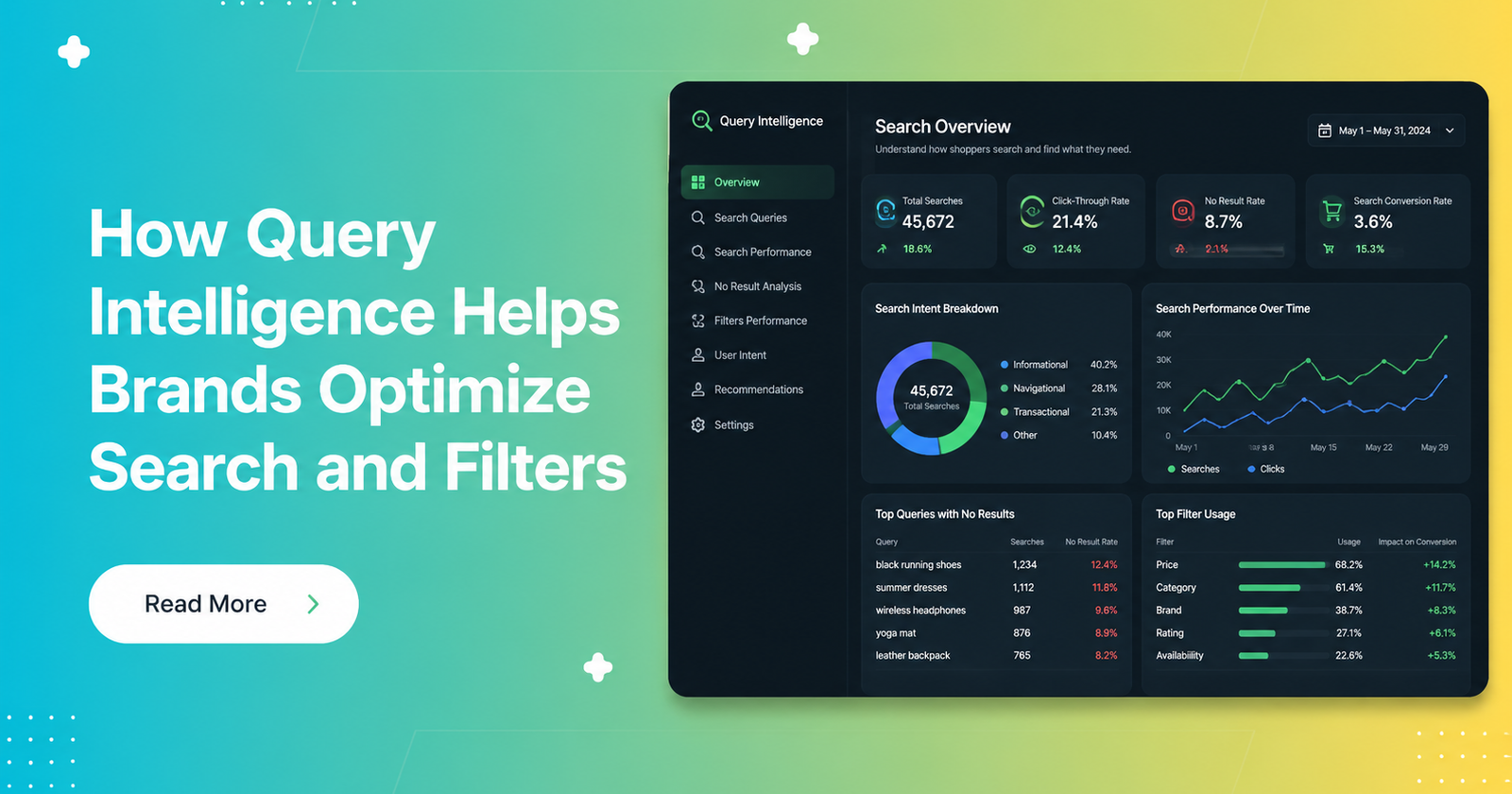
Query intelligence gives ecommerce brands a clearer view of what shoppers actually want when they use site search. Instead of treating search logs as raw data, it turns them into actionable insights that can improve relevance, filters, merchandising, and conversions.
For Shopify stores and other ecommerce brands, this matters because search behavior is one of the strongest signals of customer intent. The words shoppers type reveal what they expect to find, where the store is falling short, and which products or attributes matter most.
What Query Intelligence Means
Query intelligence is the process of analyzing search queries to understand shopper intent, demand patterns, language variations, and friction points. It goes beyond counting searches and looks at what those queries mean for product discovery.
A search term is more than a keyword. It can signal a product need, a use case, a preference, a price sensitivity, or even an unmet demand. When brands study those patterns carefully, they can make search and filters much more helpful.
This is why query intelligence is so valuable. It helps teams move from assumptions to evidence.
Why It Matters for Ecommerce
Most shoppers do not browse ecommerce stores in a neat, predictable way. They search in their own language, with their own priorities, and often with incomplete information. That creates a gap between how products are labeled and how customers describe what they want.
Query intelligence helps close that gap. It shows brands which terms customers use most often, which queries fail to return relevant results, and which searches lead to clicks, carts, or purchases.
That means the search experience can be improved based on real behavior rather than internal guesses. Over time, this leads to better discovery and stronger conversion.
What Brands Can Learn from Queries
Search queries can reveal a surprising amount about shopper intent.
Product demand
If a term is searched frequently, it often points to strong demand. That may mean a popular product, a useful category, or a trending need.
Language mismatch
If customers search for a product using words that do not appear in your catalog, that creates a discoverability problem. Query intelligence exposes those mismatches so brands can fix them with synonyms, tagging, and better product naming.
Missing attributes
If shoppers repeatedly search by color, size, occasion, material, or compatibility, those attributes probably matter more than the store realized. That can shape filter design and product data enrichment.
Conversion friction
If a query gets clicks but not purchases, the issue may be with relevance, pricing, assortment, or product page quality.
Content gaps
Some queries are informational rather than transactional. Those searches can reveal the need for buying guides, comparisons, or educational content that supports decision-making.
How Query Intelligence Improves Search
Search works best when it understands how shoppers phrase their needs. Query intelligence helps the search engine rank and match results more accurately.
If a query is broad, query intelligence can help the system surface popular or category-level products first. If a query is specific, it can prioritize exact or near-exact matches. If shoppers use slang, abbreviations, or alternate spellings, query intelligence can connect those terms to the right products.
This improves search in a few key ways:
- Better relevance.
- Better synonym handling.
- Better typo tolerance.
- Better ranking decisions.
- Better handling of long-tail queries.
The result is a search experience that feels more natural and less frustrating.
How It Improves Filters
Filters are just as dependent on query intelligence as search results are. If you know what shoppers are searching for, you can show them the filters that matter most.
For example, if many users search for products by size, then size should be one of the most visible filters. If shoppers search by occasion, then occasion-based filters should be easier to access. If they search by material or compatibility, those attributes should be emphasized in the filtering system.
Query intelligence also helps brands decide which filters to create in the first place. Instead of building filter sets based only on internal product data, teams can prioritize the attributes that customers actually use in search.
That makes filters more useful, faster to use, and more likely to drive product discovery.
Zero-Result Searches Are a Goldmine
One of the most important uses of query intelligence is identifying zero-result searches. These queries show where shoppers are looking for something the store does not understand or cannot match.
Some zero-result queries are caused by:
- Misspellings.
- Synonyms.
- Regional language differences.
- Missing product tags.
- Narrow inventory.
- Poor product naming.
These searches are extremely valuable because they point directly to friction. If the brand fixes them, the shopper experience usually improves right away.
Even when a product is not available, query intelligence can help the store respond with better fallback results, category suggestions, or alternative products.
It Helps With Merchandising Too
Query intelligence is not only about technical search quality. It also helps merchandising teams decide what to prioritize.
If certain products are frequently searched, clicked, and purchased, they may deserve more visibility. If some terms show strong demand but weak inventory, the brand may need to rethink assortment. If some products get lots of search exposure but weak conversion, they may need stronger positioning or better product pages.
This makes query intelligence a bridge between search performance and commercial strategy.
Broad Queries vs Specific Queries
Not all searches should be handled the same way.
Broad queries, such as “running shoes,” give the brand room to guide the shopper with best sellers, top-rated products, or curated collections. Specific queries, such as “black running shoes size 9,” should be matched more precisely.
Query intelligence helps search systems understand that difference. It allows the brand to apply different ranking logic depending on how specific or exploratory the query is.
That is important because the wrong result strategy can frustrate shoppers. A search system that is too generic feels imprecise. A search system that is too rigid misses merchandising opportunities.
It Reveals Customer Language
One of the biggest benefits of query intelligence is that it teaches brands how customers actually talk.
Shoppers may use casual terms, slang, abbreviations, or style-based language that never appears in internal product data. They may search for “trainers” instead of “sneakers,” “ethnic wear” instead of “traditional clothing,” or “office chair for back pain” instead of a product category.
These patterns help brands improve content, tags, filters, and even product naming. In other words, query intelligence makes the store sound more like the customer.
How to Use It Strategically
Brands can apply query intelligence in several practical ways:
- Improve search relevance with better ranking.
- Add synonyms and alternate terms.
- Fix zero-result searches.
- Build more relevant filters.
- Create content for informational queries.
- Guide merchandising priorities.
- Identify new product opportunities.
- Spot inventory gaps and demand shifts.
When these actions are tied together, search and filters become much more effective.
What Metrics Matter
To get the most from query intelligence, brands should watch a few key metrics:
- Search volume by query.
- Zero-result rate.
- Click-through rate from search.
- Add-to-cart rate from search.
- Conversion rate from search.
- Filter usage after search.
- Revenue per search session.
- Exit rate after search.
These metrics show which queries are driving value and which ones are creating friction.
Common Mistakes Brands Make
Many brands collect search data but do not use it well. A common mistake is only looking at top queries and ignoring long-tail searches. Another mistake is focusing on frequency without looking at intent.
Some teams also fail to connect query data to product data. That limits the value of the analysis because the insights never make it back into search, filters, or merchandising.
The best results come when query intelligence is used as an ongoing optimization loop, not a one-time report.
Final Thought
Query intelligence helps brands optimize search and filters because it turns real shopper behavior into practical action. It shows what customers want, how they describe it, and where the store is helping or hurting the experience.
For ecommerce teams, that is a huge advantage. It means search can become more relevant, filters can become more useful, and the entire discovery journey can become easier.
In a competitive ecommerce environment, that kind of clarity is a major advantage.